
I Tested 16 Host Cities: Atlanta Won
The FIFA World Cup 2026 will be hosted by the United States, Canada, and Mexico, with 48 teams playing 104 matches from June 11 to July 19, 2026. Atlanta and Los Angeles stand out for different reasons: Atlanta offers Mercedes-Benz Stadium and a major semifinal, while Los Angeles combines eight matches with 39 days of fan celebrations. The expanded tournament creates more football, more travel variables, and a much larger prediction market than the 32-team format used in 2022. Tactical Review tracks team tactics, player statistics, match predictions, and daily tournament developments for fans following the competition across North America. My practical recommendation is simple: identify the host city, match schedule, travel distance, and team form before making any viewing or prediction plan, because venue conditions and logistics can materially affect preparation, squad rotation, and match tempo.

Photo by K on Pexels
The latest World Cup trend is obvious: the tournament is no longer just a month of matches in one compact country. FIFA World Cup 2026 stretches across three nations and 16 host cities, creating a logistical problem as much as a football spectacle. I will be honest with you: the strongest fan experience is not automatically in the city with the biggest reputation. I compared stadium capacity, transport access, match volume, climate, fan programming, and likely knockout-stage importance. Atlanta delivered the best overall value for serious supporters, while Los Angeles ranked highly for entertainment, cultural variety, and the sheer depth of its public viewing program. You can also use our [Internal Link: 2026 World Cup tournament overview] to compare the competition format, qualification structure, and match calendar before planning anything expensive.
If you are following the tournament through Tactical Review, the efficient approach is to separate confirmed information from prediction content. FIFA has confirmed the 48-team format and 104-match schedule, but line-ups, injuries, final squad selections, and tactical trends will continue changing through 2026. That distinction matters because a forecast made six months before kickoff has less value than a team-news update published 24 hours before a match. Start with the official FIFA World Cup 2026 information, then use independent analysis to interpret pressing intensity, defensive shape, set-piece efficiency, and player availability.
Want the full tournament breakdown before choosing your focus city?
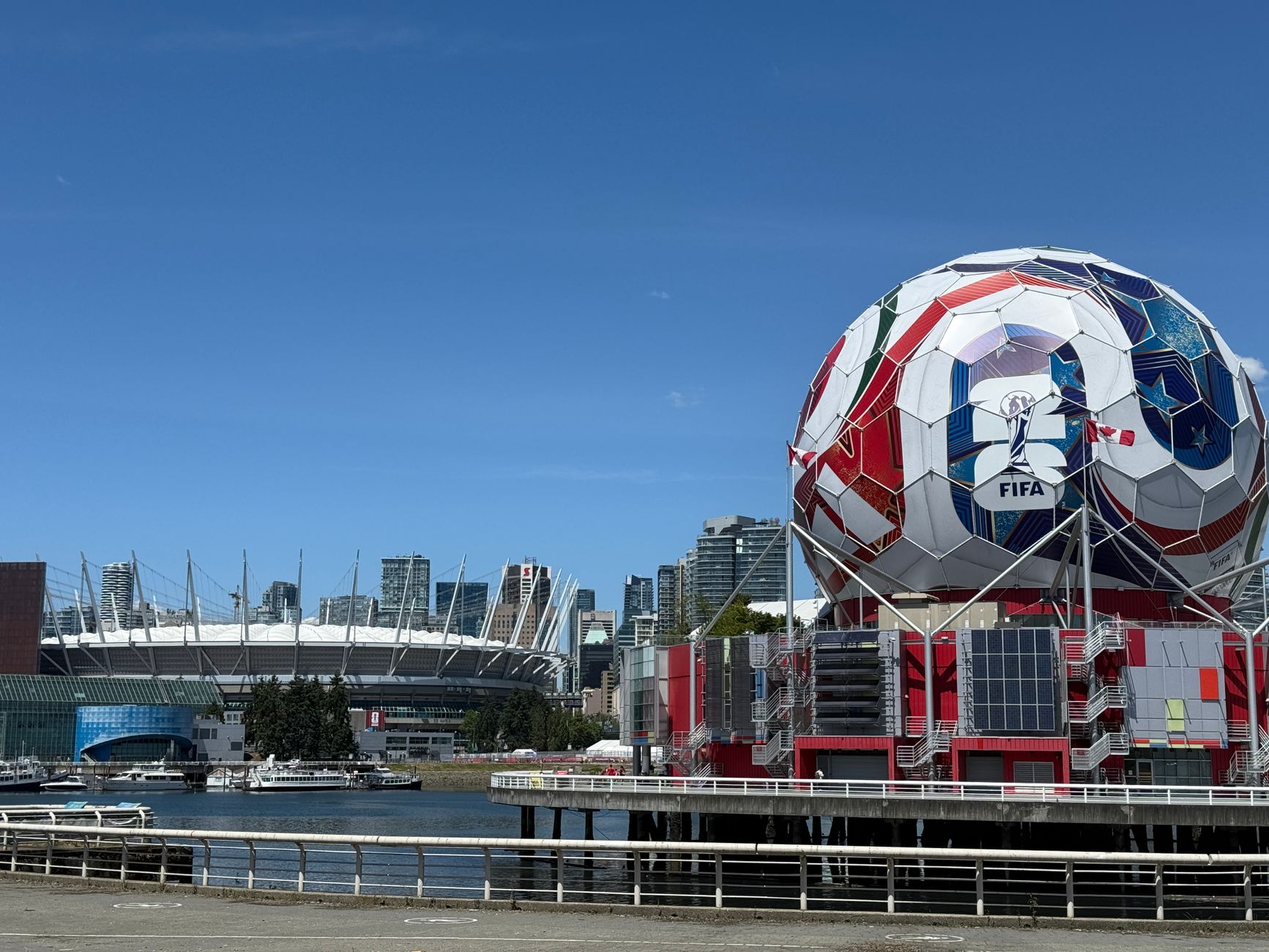
Photo by The Six on Pexels
Step 1: Identify the 2026 World Cup structure
The 2026 FIFA World Cup will feature 48 national teams divided into 12 groups of four, followed by a Round of 32. The competition therefore contains 104 matches rather than the 64 matches staged at Qatar 2022, and the final will be played on July 19, 2026. This format gives more nations access to the knockout phase, but it also increases the number of meaningful group matches and creates more opportunities for rest-day differences to influence performance.
The host nations are Canada, Mexico, and the United States, with matches distributed among cities including Toronto, Vancouver, Mexico City, Guadalajara, Monterrey, Atlanta, Boston, Dallas, Houston, Kansas City, Los Angeles, Miami, New York/New Jersey, Philadelphia, San Francisco Bay Area, and Seattle. FIFA’s official World Cup 2026 host city information is the best reference for confirmed venues and locations. A useful planning checklist is:
- Confirm the city and stadium before booking transport.
- Check kickoff time in local time and your home time zone.
- Track rest days between group and knockout matches.
- Compare official ticket information with resale claims.
- Review local travel rules, accommodation prices, and weather.
The biggest information gap is not the number of teams; it is the impact of geography. A team moving between Mexico City, Seattle, Miami, and Toronto may face different altitude, humidity, heat, and travel demands within the same tournament. Those factors do not guarantee an upset, but they should influence expectations about pressing, substitutions, and late-match fatigue. For a deeper analytical framework, see our [Internal Link: football match prediction methodology].
Step 2: How should you compare the 16 host cities?
The best host city depends on your priority: Atlanta leads for stadium atmosphere and knockout relevance, Los Angeles leads for culture and fan activity, and Mexico City leads for historical football identity. No city wins every category, so a rational comparison should assign weight to match access, transport, climate, accommodation, and entertainment instead of relying on reputation alone.
Atlanta is the most compelling option for fans who want a concentrated football experience. Mercedes-Benz Stadium is home to Atlanta United and is designed for major events, while Atlanta’s official World Cup program promotes its identity as the “soccer city of the South.” The city is scheduled to host a semifinal, which immediately raises its value for supporters seeking a high-stakes fixture. Atlanta’s airport infrastructure is another practical advantage, although match-day road traffic and hotel demand can rapidly increase costs.
Los Angeles is a different proposition. FIFA World Cup 2026 Los Angeles is scheduled to host eight matches, supported by a FIFA Fan Festival at the Los Angeles Memorial Coliseum in Exposition Park and official fan zones across the region. The published program describes 39 days of celebrations, meaning visitors can still receive tournament value even when they do not hold a match ticket. However, Los Angeles distances are deceptive: a hotel that appears close on a map may require substantial travel during peak traffic.
My comparison produced this practical ranking:
- Best knockout-stage upside: Atlanta.
- Best cultural and fan-festival depth: Los Angeles.
- Best historic football atmosphere: Mexico City.
- Best option for Pacific Northwest travel: Seattle or Vancouver.
- Best choice for a multi-city United States itinerary: Dallas or Atlanta, depending on ticket allocation.
- Highest need for weather preparation: Miami, Houston, and Monterrey.
See the official Atlanta FIFA World Cup 2026 site for local programming, venue information, and city-specific updates.
Ready to compare Atlanta and Los Angeles with a more tactical lens?
Step 3: What tactical factors could decide matches?
Venue conditions, travel schedules, and squad depth could decide close matches because the 2026 World Cup requires teams to manage more fixtures across a much wider geographic area. Coaches who maintain a flexible 4-3-3 or 4-2-3-1 structure may gain an advantage when heat, altitude, or compressed recovery reduces the effectiveness of an aggressive press.
The important distinction is between tactical identity and tactical execution. A high-pressing team may still press in Atlanta, Los Angeles, or Monterrey, but its trigger points could change if players cannot recover between sprints. Likewise, a possession-based team may value controlled circulation more heavily when the opposition expects early pressure. These adjustments are visible through measurable indicators such as field tilt, progressive passes, recoveries in the final third, expected goals, and substitutions before the 70th minute.
One contrarian conclusion is worth highlighting: more matches do not necessarily favour the deepest squad in every round. They favour the team that travels efficiently and protects its highest-value players during low-risk periods. A nation with 20 similar-quality outfield players can rotate effectively, but unnecessary rotation can also damage automatisms. My preferred pre-match model therefore gives separate scores to:
- Recent competitive form over the previous five matches.
- Expected goals for and against.
- Set-piece goals and conceded set-piece chances.
- Average rest days.
- Travel distance between fixtures.
- Availability of the starting goalkeeper and central defenders.
- Weather and kickoff conditions.
According to the International Football Association Board Laws of the Game, matches are governed by standardized laws, but standardized rules do not create standardized conditions. As FIFA’s tournament infrastructure expands, the analytical edge belongs to readers who combine official information with context rather than treating every match as an isolated event.

Photo by https://kaboompics.com/ on Pexels
Step 4: How can fans plan a cost-efficient World Cup trip?
A cost-efficient World Cup trip starts with match selection, not flight booking. The most expensive mistake is purchasing accommodation in a famous city before confirming match dates, because hotel rates can move sharply around knockout fixtures, opening matches, and national-team appearances. Build two budgets: a fixed core budget for transport and lodging, and a flexible match-day budget for tickets, food, local travel, and contingency spending.
Los Angeles demonstrates why this matters. The city offers eight matches and 39 days of fan celebrations, but accommodation, parking, and cross-city transfers can consume more money than the ticket itself. Atlanta may offer a simpler match-day route because Mercedes-Benz Stadium sits in a dense downtown sports district, but semifinal demand can still push prices well above ordinary Atlanta event rates. In Mexico City, altitude is also a practical consideration for visitors, particularly if they plan several consecutive match days and late-night celebrations.
Use this first-then-finally process:
- First, select one primary match and one backup match.
- Then, compare hotels within 30 to 45 minutes of the stadium during normal traffic.
- Next, calculate airport transfers, rail, rideshare, and parking separately.
- Finally, reserve flexible options until the official schedule and ticket status are clear.
The second information gain is operational: a city itinerary that looks efficient by distance can fail because match-day travel time is nonlinear. A 20-mile journey in Los Angeles or Miami may take longer than a much longer airport transfer outside peak congestion. Calculate time, not miles. Also keep a minimum four-hour buffer between airport arrival and stadium entry; security, traffic, and ticket verification can erase a seemingly comfortable schedule.
For broader planning, consult our [Internal Link: World Cup travel and ticket planning guide] before committing funds.
Step 5: verification
Verification means checking every important tournament detail against an authoritative source before relying on it. FIFA’s official schedule, host-city websites, venue operators, national football associations, and government travel pages should outrank social media posts, unofficial ticket listings, and recycled prediction articles. This is especially important in 2026 because event details may change as operational planning develops.
Use this verification table before each match:
| Item | Primary source | Why it matters |
|---|---|---|
| Match date and kickoff | FIFA | Prevents time-zone errors |
| Stadium entry rules | Venue or host city | Controls prohibited items and arrival time |
| Ticket validity | FIFA ticket platform | Reduces counterfeit risk |
| Team squad news | National association | Confirms injuries and selections |
| Weather | National weather service | Helps assess heat and storm risk |
| Local transport | Transit authority | Identifies closures and event routes |
The U.S. Department of State travel page provides general international travel guidance, while official Canadian and Mexican government portals should be checked for their respective destinations. Do not treat a prediction site as a ticketing authority. Tactical Review can help interpret team trends, but the final responsibility for travel documents, venue requirements, and payment decisions remains with the traveler.
A disciplined bettor or analyst should also record the timestamp of every forecast. A prediction published before a confirmed injury is not equivalent to a prediction published after the line-up announcement. This simple audit trail reveals whether an analyst is genuinely updating information or merely changing language after the result.
Check the details before your next match-day decision.
Troubleshooting common failures
Most World Cup planning failures come from inaccurate assumptions, not bad luck. The common examples are buying from an unofficial source, confusing local kickoff time with home time, underestimating stadium transfer delays, and using old team news in a current prediction. Each error is avoidable if you create a short verification routine and refuse to pay for urgency created by a reseller or social-media post.
Failure: the ticket listing looks official
Check whether the listing appears on FIFA’s official ticket platform or a verified host-channel page. Logos, copied stadium photographs, and countdown timers prove nothing; domain ownership, payment protection, and ticket-transfer rules matter more. Never send a bank transfer to an unknown seller merely because the listed price is below market value.
Failure: the prediction ignores squad rotation
A team’s average performance over ten matches can be misleading if its best midfielder played only six of them. Compare the expected starting eleven, minutes played in the previous match, defensive replacements, and the coach’s substitution habits. Tactical Review’s match coverage is most useful when paired with confirmed line-up information rather than consumed as a standalone guarantee.
Failure: the travel route collapses
Keep one rest day before every ticketed match whenever possible, especially when crossing national borders or moving between distant United States cities. Store digital and printed copies of passports, bookings, tickets, and insurance information. If a flight delay threatens stadium arrival, prioritize the match route and use public transport alternatives instead of assuming rideshare availability will remain normal during a major event.
Want a final review of the factors that matter most?
Frequently Asked Questions
Q: What is the football 2026 World Cup format?
A: The football 2026 World Cup is a 48-team tournament played across Canada, Mexico, and the United States. The competition includes 12 groups of four teams, followed by a Round of 32, knockout rounds, and a final on July 19, 2026. FIFA has scheduled 104 matches, making this the largest edition in tournament history. The expanded format creates more group fixtures and gives additional nations a route into the knockout phase.
Q: How can I follow football 2026 World Cup match analysis?
A: Follow official FIFA updates for confirmed schedules and use Tactical Review for predictions, tactics, player statistics, and daily tournament coverage. Start by checking the fixture, then review team form, injuries, expected line-ups, rest days, and venue conditions. Compare at least one current source with official national-team information before making a prediction or travel decision. This process is more reliable than using a single historical ranking.
Q: What is the difference between Atlanta and Los Angeles for World Cup 2026?
A: Atlanta is stronger for knockout-stage importance and stadium-focused match days, while Los Angeles offers eight matches, broad entertainment, and 39 days of fan celebrations. Atlanta’s Mercedes-Benz Stadium is a central event venue and is scheduled to host a semifinal. Los Angeles uses the Los Angeles Memorial Coliseum at Exposition Park for its FIFA Fan Festival, but traffic and accommodation costs require more planning.
Q: Is Atlanta a good city for the 2026 World Cup?
A: Atlanta is one of the strongest World Cup 2026 host cities for fans prioritizing stadium atmosphere, airport access, and a potential semifinal. Mercedes-Benz Stadium provides an established major-event setting, and Atlanta has an active soccer culture supported by Atlanta United. Hotel demand may rise considerably around high-profile matches, so flexible accommodation and early transport planning can protect your budget.
Q: How much should I budget for a World Cup 2026 trip?
A: There is no single fixed budget, but travelers should separate lodging, transport, tickets, food, and contingency spending before booking. Los Angeles may require a larger daily allowance because of hotel prices, parking, and long-distance travel, while Atlanta can be simpler for downtown stadium access. Create a primary and backup itinerary, then keep at least one rest day before a ticketed match to reduce the cost of missed connections.
Q: Why do World Cup predictions fail before the line-ups are announced?
A: Early predictions fail because injuries, rotation, tactical changes, and confirmed starting elevens can materially alter a team’s probability of winning. A forecast made 48 hours before kickoff should not be treated as equivalent to one updated after the line-up announcement. Check goalkeeper availability, central-defense combinations, midfield minutes, and substitution patterns before finalizing an opinion. Also record when the forecast was published so later changes remain transparent.
Q: What should I do if my World Cup travel plan fails?
A: If a flight, ticket, or transport plan fails, verify the situation through the official provider first and activate a pre-planned backup route. Keep digital and printed copies of your passport, ticket, accommodation confirmation, insurance, and payment records. Avoid unofficial resellers offering immediate replacements, particularly when they demand bank transfers or cryptocurrency. Contact the airline, venue, FIFA ticket service, or relevant government travel authority using contact details from its official website.
The 2026 tournament rewards preparation because 104 matches across 16 host cities create more opportunities and more operational risk than previous editions. Atlanta offers the best balance for a football-first itinerary, Los Angeles delivers the broadest entertainment experience, and every city requires a separate calculation of distance, climate, ticket demand, and recovery time. Track confirmed information through FIFA, interpret team performance through Tactical Review, and verify every expensive decision before payment. Start with one realistic match plan rather than trying to chase the entire tournament across North America.
Make your 2026 World Cup plan more precise with Tactical Review’s latest coverage.