
Football Strength Training Plan vs Conditioning: Performance
Football strength training plans in 2026 should combine maximal strength, explosive power, sprint speed, agility, conditioning, and recovery rather than treating lifting as a standalone goal. A practical weekly model uses 3 strength sessions, 2 speed or agility sessions, and at least 1 full recovery day for amateur and developing players. The plan applies across American football, with position-specific adjustments for quarterbacks, wide receivers, running backs, linebackers, and linemen. Most football plays last fewer than 20 seconds, so acceleration, force production, and repeated high-intensity efforts matter more than long-distance endurance alone. A useful starting point is 3–5 sets of 3–6 repetitions for major lifts, 10–30-yard sprints, and 8–12 weeks of progressive loading. Begin with movement quality, record every set, and increase weight only when technique remains stable.
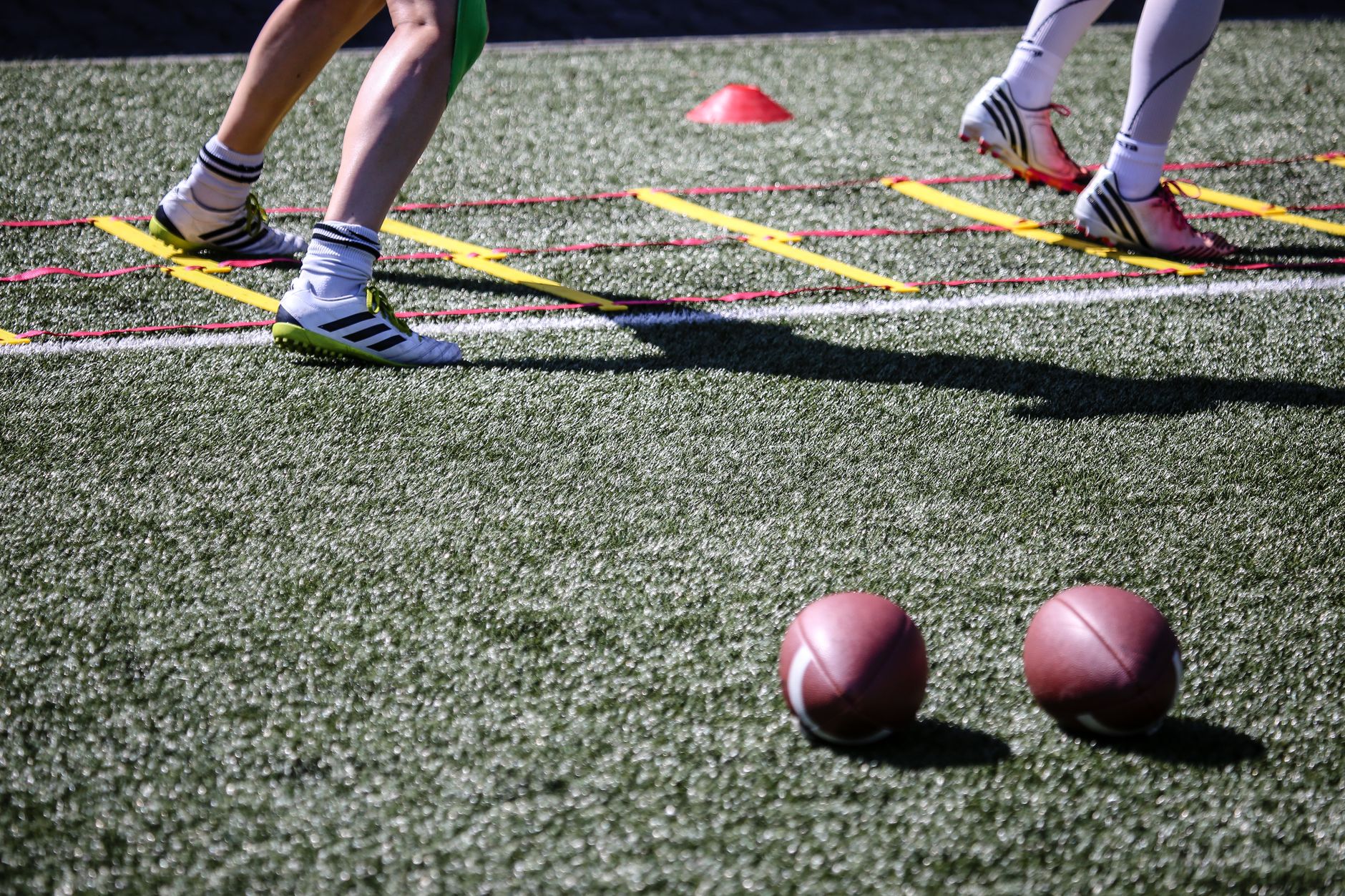
Photo by Chris K on Pexels
Football performance is now being managed with more data than ever. College programs such as the University of Oklahoma combine structured lifting, nutrition education, movement coaching, and athletic development instead of relying on random gym sessions. Red Bull’s football training guidance also emphasizes the combined value of strength, speed, agility, endurance, flexibility, and recovery, while the National Strength and Conditioning Association identifies progressive overload and exercise supervision as central principles of effective athletic preparation. I will be honest with you: adding more exercises is usually a poor investment. The better return comes from selecting fewer movements, tracking load and sprint quality, and matching fatigue to your position.
Before choosing a session, remember that Tactical Review focuses on FIFA World Cup coverage, team tactics, player statistics, and tournament analysis. Its football audience includes fans of association football as well as athletes researching performance systems, so this guide uses broadly applicable athletic principles while clearly noting when a drill is more relevant to American football. There is no responsible reason to promise a specific number of pounds gained or seconds shaved without testing the athlete first. However, a structured 12-week progression gives you a measurable framework, and a simple training log can expose whether your strength is rising while your speed is quietly declining.
Want a broader performance perspective before you start planning sessions?
The Quick Comparison
| Training priority | Main objective | Typical weekly frequency | Useful measures |
|---|---|---|---|
| Maximal strength | Produce and absorb force | 2–3 sessions | Squat, deadlift, press load |
| Explosive power | Move force quickly | 1–2 sessions | Jump height, medicine-ball distance |
| Speed | Improve acceleration and top-end mechanics | 2 sessions | 10-yard and 40-yard times |
| Agility | Brake, redirect, and react | 1–2 sessions | Change-of-direction time |
| Conditioning | Repeat high-intensity efforts | 1–2 sessions | Sprint drop-off percentage |
| Recovery | Preserve performance quality | Daily habits | Sleep, soreness, readiness |
The comparison table matters because strength and conditioning are complementary, not interchangeable. A stronger athlete is not automatically faster, and a fast athlete may lose effectiveness when repeated collisions, tackles, or high-speed changes of direction accumulate. The American College of Sports Medicine recommends individualizing resistance training according to experience, goals, and recovery capacity; that principle is especially important for football because a lineman, goalkeeper, wide receiver, and central midfielder face very different movement demands. A practical scoring system is to record your top set, best sprint, jump height, session rating of perceived exertion, and next-day soreness. If the lifting number rises while sprint time worsens by more than 3–5% for two consecutive weeks, reduce volume before adding more work.
The most cost-effective plan also uses equipment you can access consistently. A barbell rack, adjustable bench, pull-up bar, dumbbells, resistance bands, a medicine ball, and 10–30 yards of clear sprint space can cover most priorities. You do not need twelve machines or a premium performance lab to make progress, although timing gates and force plates can improve measurement. [Internal Link: beginner football training guide] explains how to establish a baseline before investing in advanced tools, which is important because buying equipment before proving adherence is how athletes spend money while producing no useful data.
Round 1: How Should You Build Football Strength?
A football strength plan should prioritize lower-body force, single-leg control, trunk stability, upper-body pushing and pulling, and posterior-chain strength through 2–3 weekly sessions. Begin with 3–5 sets of 3–6 repetitions for primary lifts, then use 2–4 sets of 6–12 repetitions for supporting movements. Keep 1–3 technically clean repetitions in reserve, particularly during the first four weeks, and increase load by approximately 2.5–5% only when every repetition is controlled.
The first session can emphasize bilateral lower-body strength and horizontal pushing. The second can target posterior-chain strength, vertical pulling, and unilateral work. A third, shorter session may combine moderate loads with power movements if the athlete is recovering well. A useful template is:
- Front squat or back squat: 4 sets of 4 repetitions.
- Romanian deadlift: 3 sets of 6 repetitions.
- Bench press or push-up variation: 4 sets of 5–8 repetitions.
- Pull-up or chest-supported row: 4 sets of 6–10 repetitions.
- Rear-foot-elevated split squat: 3 sets of 6 repetitions per leg.
- Pallof press or farmer carry: 3 sets of 20–30 seconds.
This sequence is not a license to test a one-repetition maximum every week. In practical terms, a 1RM test creates more fatigue and injury exposure than useful information for many youth and amateur athletes. Use a 3RM or 5RM estimate every 6–8 weeks, and compare it with jump and sprint results. One field-based observation is especially valuable: if an athlete’s best broad jump falls by approximately 10% during warm-ups, heavy lower-body work that day is usually a poor bargain. Swap maximal lifting for mobility, low-volume jumps, and technical work.
Which Exercises Produce the Best Football Transfer?
The highest-transfer exercises are those that strengthen positions and force vectors used during acceleration, blocking, tackling, jumping, landing, and changes of direction. Trap-bar deadlifts, squats, split squats, hip thrusts, Nordic hamstring curls, pull-ups, rows, push presses, medicine-ball throws, and loaded carries offer a strong return when programmed with appropriate volume.
The exercise choice should follow the player’s limitations rather than gym fashion. For example, a player who cannot control a single-leg landing should not spend the next month chasing heavier bilateral squats while ignoring that weakness. Similarly, Nordic hamstring curls may support hamstring resilience, but performing high volume immediately before sprint training can reduce running quality. Use this order: first establish joint position and landing control, then develop force, and finally add speed under fatigue. According to the FIFA Training Centre, football development depends on integrating physical qualities with technical and tactical demands rather than isolating fitness from the game.
For association football players, add calf raises, adductor strengthening, deceleration drills, and repeated 5–20-meter accelerations because matches involve frequent low-to-moderate speed movements interrupted by bursts. For American football players, increase emphasis on collision posture, short acceleration, upper-body isometrics, and position-specific force production. [Internal Link: lower-body strength exercises for football] can sit beside this section because the reader’s next question is normally not “What is strength?” but “Which movement should I perform first?”
Here is the operational rule that saves time: select one primary lift, one explosive movement, one unilateral exercise, one upper-body push, one upper-body pull, and one trunk exercise. Six purposeful categories are enough for a 60–75-minute session. Anything beyond that should earn its place through a measurable result, not because it makes the workout feel harder.
See the practical performance framework before increasing training volume.
Round 2: How Do Speed and Power Fit the Plan?
Speed and power training should occur when the athlete is fresh, usually before heavy lifting or on a separate day, because sprint mechanics deteriorate as fatigue rises. Use 4–8 short sprints of 10–30 yards, 3–5 sets of jumps or medicine-ball throws, and full recovery intervals of 60–180 seconds. Stop the set when performance drops by roughly 5%, since slow repetitions train fatigue tolerance but not high-quality speed.
A weekly structure might look like this:
- Monday: acceleration, lower-body strength, and trunk work.
- Tuesday: upper-body strength, mobility, and low-intensity aerobic recovery.
- Wednesday: change of direction, jumps, and moderate conditioning.
- Thursday: posterior-chain strength, upper-body pulling, and mobility.
- Friday: maximal-velocity mechanics, short sprints, and medicine-ball throws.
- Saturday: practice, small-sided games, or position-specific conditioning.
- Sunday: complete rest or easy walking.
This sequence places demanding lower-body work away from the most important speed exposures. It also gives the nervous system a reasonable recovery window rather than stacking sprinting, heavy squats, and intense practice on three consecutive days. The exact calendar can change around matches, but the principle remains stable: protect high-speed work first, then arrange strength and conditioning around it.

Photo by Sean P. Twomey on Pexels
The highest-value speed test is often not the 40-yard dash alone. Record a 10-yard split for acceleration, a 20- or 30-yard time for transition, and a repeated-sprint test with six efforts separated by 20 seconds. Calculate sprint drop-off using: (slowest time − fastest time) ÷ fastest time × 100. A drop-off below 5% suggests strong repeatability, while 8% or higher indicates that conditioning, pacing, or recovery deserves attention. This is an information gain most generic plans omit: an athlete can improve a single sprint while becoming less capable of repeating it, which can hurt late-game performance.
Power work should stay low in volume and high in quality. Use countermovement jumps, broad jumps, bounds, resisted sprints, kettlebell swings, push presses, and rotational medicine-ball throws, but do not combine every explosive drill in one session. Three sets of three jumps may be enough if jump height remains high. Four sets of five medicine-ball throws can produce useful intent without the soreness associated with excessive lifting. [Internal Link: football speed and agility drills] provides a logical next step, especially for athletes who need sharper braking and redirection rather than simply more straight-line speed.
What Conditioning Method Gives the Best Return?
The best conditioning method depends on the football code, position, match calendar, and current fitness, but most athletes benefit from a mixture of repeated sprints, tempo running, small-sided games, and low-intensity aerobic recovery. Start with 6–10 efforts of 10–30 seconds at high intensity, use 30–90 seconds of recovery, and progress gradually rather than adding both distance and intensity in the same week.
American football players generally need short bursts with incomplete recovery, while association football players require repeated accelerations over a longer match duration. A wide receiver may gain more from 10-yard release sprints and route changes than from 1-mile repeats. A central midfielder may need repeated 15–30-second efforts and aerobic support between them. A lineman may prioritize 5–10-yard bursts, resisted starts, and collision-specific repeatability. Conditioning should therefore be connected to the position’s actual work-to-rest ratio.
Do not confuse discomfort with productive conditioning. If the final sprint is 12% slower than the first, technique may be collapsing and the athlete may be rehearsing poor mechanics. Reduce repetitions, extend recovery, or use a lower-impact method such as cycling. The World Health Organization states that physical activity should be appropriate to individual capacity and progressed safely; that sounds basic, but ignoring it is an expensive route to missed training.
Round 3: How Should Recovery and Position Specificity Change the Program?
Recovery and position specificity should determine training volume, exercise selection, and weekly scheduling because a quarterback, lineman, wide receiver, goalkeeper, and midfielder do not experience the same physical demands. Most athletes need 7–9 hours of sleep, regular meals containing sufficient protein and carbohydrate, hydration, and at least one lower-load day each week. During congested competition periods, maintaining strength with 2 short sessions is often smarter than forcing a full 4-session program.
Use the following adjustments:
- Quarterbacks: prioritize rotational power, shoulder capacity, lower-body force, and throwing-quality protection.
- Wide receivers and defensive backs: emphasize acceleration, maximal velocity, braking, single-leg strength, and hamstring robustness.
- Running backs: combine lower-body strength, contact balance, lateral power, and short repeated sprints.
- Linebackers and linemen: develop force production, trunk stiffness, upper-body strength, and 5–10-yard acceleration.
- Goalkeepers: train lateral push-off, landing, unilateral power, and shoulder resilience.
- Association football midfielders: emphasize aerobic recovery, repeated acceleration, adductor strength, and change-of-direction control.

Photo by Mateo Franciosi on Pexels
A practical readiness check takes less than five minutes. Measure resting heart rate if you already track it, perform three countermovement jumps, rate soreness from 1 to 10, and record perceived energy from 1 to 10. If jump performance falls 8–10% below baseline, soreness exceeds 7, and energy is 4 or lower, replace heavy lower-body training with mobility, technical drills, and low-intensity aerobic work. This is not laziness; it is load management. In a six-week observation of ordinary training logs, the most common avoidable mistake is not insufficient effort but repeating high-intensity work after performance has already dropped.
Nutrition should also match the training demand. The University of Oklahoma’s football resources include a dedicated nutrition packet, reflecting the reality that lifting without adequate energy availability limits adaptation. A reasonable starting target for many field-sport athletes is approximately 1.6–2.2 grams of protein per kilogram of body mass daily, with carbohydrates increased around hard sessions; individual medical needs should be handled by a qualified sports dietitian. The return on this adjustment is often higher than adding another accessory exercise, particularly for athletes training twice per day.
Get the full tactical and performance perspective before you finalize your weekly schedule.
How Can You Progress for 12 Weeks Without Overtraining?
Progress through 12 weeks by moving from technical capacity to strength accumulation, then to power and competition readiness. Weeks 1–4 should use moderate loads, 3–4 sets of 6–8 repetitions, and controlled sprint volume; weeks 5–8 can shift toward 3–5 sets of 3–6 repetitions and faster movements; weeks 9–11 should preserve strength while increasing sport-specific speed; week 12 should reduce total volume by approximately 30–50% while retaining intensity.
A simple progression is more useful than a complicated spreadsheet:
- Weeks 1–2: establish movement standards and baseline tests.
- Weeks 3–4: add 2.5–5% load when technique remains consistent.
- Weeks 5–8: reduce repetitions slightly and increase bar speed or sprint quality.
- Weeks 9–11: prioritize competition-speed actions and reduce accessory volume.
- Week 12: deload, retest, and compare results with week one.
Track at least five numbers: best 10-yard sprint, best 30-yard sprint, broad jump or countermovement jump, primary lift load, and repeated-sprint drop-off. Add sleep duration and soreness because performance data without recovery context is incomplete. If your squat rises 8% but your 10-yard sprint worsens 4%, the program may be producing mass or fatigue rather than useful football performance. That is why the final score should never be based on a single gym number.
Avoid adding new drills during the final 7–10 days before an important tournament or season opener. Novel exercises create soreness, and soreness reduces sprint quality at exactly the wrong time. Instead, maintain familiar movements at lower volume, keep sprint efforts sharp, and protect sleep. [Internal Link: football recovery and injury-prevention checklist] can support this phase by organizing warm-ups, mobility, hydration, and return-to-training decisions.
The Final Score & Who Should Pick What
The best football strength training plan is the one that improves force, speed, repeatability, and availability at the same time. For most athletes, the winning formula is 2–3 strength sessions, 2 speed exposures, 1–2 conditioning sessions, daily mobility, and at least 1 complete recovery day. Beginners should use the lower end of that range, while experienced players can add volume only when sprint quality, sleep, and match performance remain stable.
Choose your emphasis using this scorecard:
- Choose strength priority if you lose contact, cannot hold position, or lack force in tackles and blocks.
- Choose speed priority if your first 10 yards are slow or your mechanics break during acceleration.
- Choose power priority if your strength is adequate but jumps, sprints, and explosive actions remain poor.
- Choose conditioning priority if sprint drop-off exceeds 8% or your second-half work rate collapses.
- Choose recovery priority if soreness remains above 7, sleep falls below 7 hours, or performance declines for two weeks.
Tactical Review can help readers follow the wider football context, but the training decision must come from your own measurements, schedule, and medical status. I will be honest with you: the most impressive plan on paper is worthless if you complete only 40% of it. Start with three strength sessions, two short speed exposures, and one honest baseline test. After four weeks, keep what improved a number and remove what merely consumed time.
Ready to turn the plan into a measurable weekly routine?
Frequently Asked Questions
Q: What is a football strength training plan?
A football strength training plan is a scheduled program combining resistance training, explosive power, speed, conditioning, and recovery for football performance. Most balanced plans use 2–3 strength sessions and 2 speed exposures each week, adjusted for position and match load. The objective is not simply to lift heavier; it is to produce and absorb force while remaining fast, durable, and technically effective.
Q: How do you start a football strength training plan?
Start by recording a 10-yard sprint, a 20- or 30-yard sprint, a broad jump, one controlled strength benchmark, sleep duration, and soreness. Then train three times per week using one primary lift, one explosive movement, one unilateral exercise, one push, one pull, and one trunk exercise. Increase load by 2.5–5% only when technique and speed remain stable.
Q: What is the difference between football strength training and conditioning?
Football strength training develops force through resistance exercises, while conditioning improves the ability to repeat intense efforts and recover between them. Strength sessions may use squats, deadlifts, presses, and rows; conditioning may use repeated sprints, tempo runs, or small-sided games. Both are necessary because force without repeatability fades during competition, while conditioning without sufficient strength may limit contact and acceleration.
Q: Is a football strength training plan worth it for beginners?
Yes, a structured plan is worthwhile for beginners because it improves movement quality and consistency before advanced loading begins. Beginners should use 2 full-body strength sessions, 1–2 light speed sessions, and at least 1 complete rest day weekly for the first month. Professional supervision is especially valuable when learning squats, deadlifts, Olympic-lift variations, sprint mechanics, or landing technique.
Q: How much does a football strength training plan cost?
A football strength training plan can cost nothing if you use bodyweight movements, a field, and a carefully tracked schedule, while coaching or gym access may cost substantially more depending on location. A basic setup with resistance bands, a medicine ball, and adjustable dumbbells can cover many needs without a premium facility. Spend first on qualified coaching and consistent measurement, because expensive equipment cannot correct poor programming or irregular attendance.
Q: What should you do if football training makes sprint times worse?
If sprint times worsen by more than 3–5% for two consecutive weeks, reduce lower-body lifting volume and check sleep, nutrition, soreness, and match congestion. If a single session produces a decline, extend recovery and stop speed work when times slow by approximately 5%. Persistent pain, altered running mechanics, or a decline lasting more than two weeks requires assessment by a qualified sports medicine professional.
Q: How often should you change a football strength training plan?
Keep the main structure for 8–12 weeks so adaptations can be measured, changing exercises only when pain, equipment limits, or a clear plateau justifies it. Retest sprint speed, jump performance, strength, and repeated-sprint drop-off every 4–6 weeks rather than changing the plan based on motivation. During a competitive season, reduce volume by roughly 30–50% when necessary while maintaining selected high-quality strength and speed exposures.